
The Short Answer
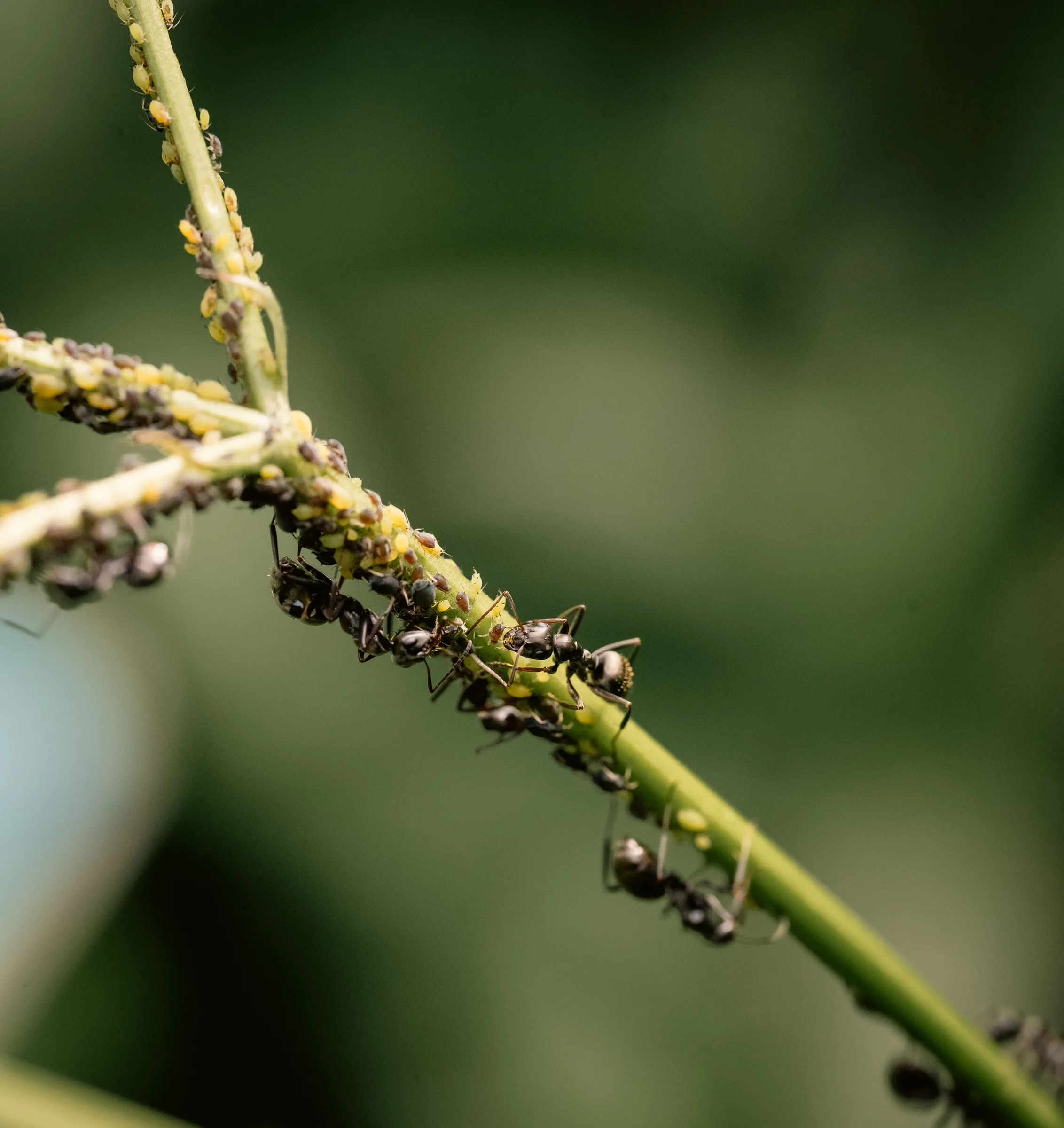
Scale insects are small, immobile pests that attach themselves to stems and leaves and cover themselves with a hard or waxy protective shell, often looking more like small bumps or a natural part of the plant’s texture than a living insect. This disguise is exactly why they frequently go unnoticed until a population has grown large enough to visibly weaken the plant.
How to Identify Scale Insects
- Small, dome-shaped or flat bumps. Usually brown, tan, or grayish, ranging from pinhead-sized to about a quarter-inch, often clustered along stems or on leaf undersides and along leaf veins.
- Bumps that don’t brush off easily. Unlike dust or debris, scale insects are attached firmly and require some deliberate scraping or pressure to remove, which helps distinguish them from cosmetic marks.
- Sticky honeydew residue. Like aphids and mealybugs, scale insects excrete honeydew as they feed, which can make nearby surfaces sticky and sometimes leads to sooty mold growth.
- Yellowing or weakened growth on heavily infested stems. A concentrated cluster of scale on a single stem or branch can noticeably weaken just that section even while the rest of the plant looks fine.
Why Scale Insects Are Hard to Treat
The hard or waxy shell that gives scale insects their name provides real physical protection against many surface-contact insecticides, especially for adult scale that’s already fully developed its protective covering. This is similar to the challenge mealybugs present, though scale’s harder shell in many species can be even more resistant to typical treatments applied without additional physical removal.
Treating a Scale Infestation
- Physically scrape or wipe off visible scale. A fingernail, a soft toothbrush, or a cloth dipped in rubbing alcohol can dislodge and kill adult scale directly, which is often more effective as a first step than relying on spray treatments alone against the protected adults.
- Apply horticultural oil or neem oil. These treatments are more effective against the mobile, unprotected “crawler” stage of young scale insects than against fully shelled adults, which is why timing and repeated application matter.
- Repeat treatment to catch newly hatched crawlers. Since adult scale is protected but young crawlers are not, treating on a repeated schedule increases the chance of catching the vulnerable stage before it develops full protection.
- Isolate heavily infested plants while treating, since scale can spread to neighboring plants that are in close contact.
Distinguishing Scale From Natural Plant Features
Some plants naturally have small bumps, nodes, or textured stem features that can be mistaken for scale by an inexperienced eye. Checking whether the bumps are uniform in appearance and placement (consistent with a natural plant feature) versus irregular in size, clustered unevenly, or accompanied by sticky residue and yellowing (consistent with an actual infestation) helps avoid unnecessary treatment of a perfectly healthy plant.
FAQ
Can I just remove an entire heavily infested stem instead of treating it?
Yes, for a stem with a severe, concentrated infestation, pruning it away entirely is often more efficient than trying to treat and save it, especially if the rest of the plant is still relatively unaffected.
How long does it typically take to clear a scale infestation?
Because of the need to catch multiple generations of crawlers over time, clearing an established scale infestation often takes several weeks of repeated treatment rather than a single application.
Is scale insect damage reversible once leaves have yellowed?
Already-damaged leaves generally won’t recover their original color or health, but treating the infestation should allow new, healthy growth to resume once the pest pressure is under control.



