
The Short Answer
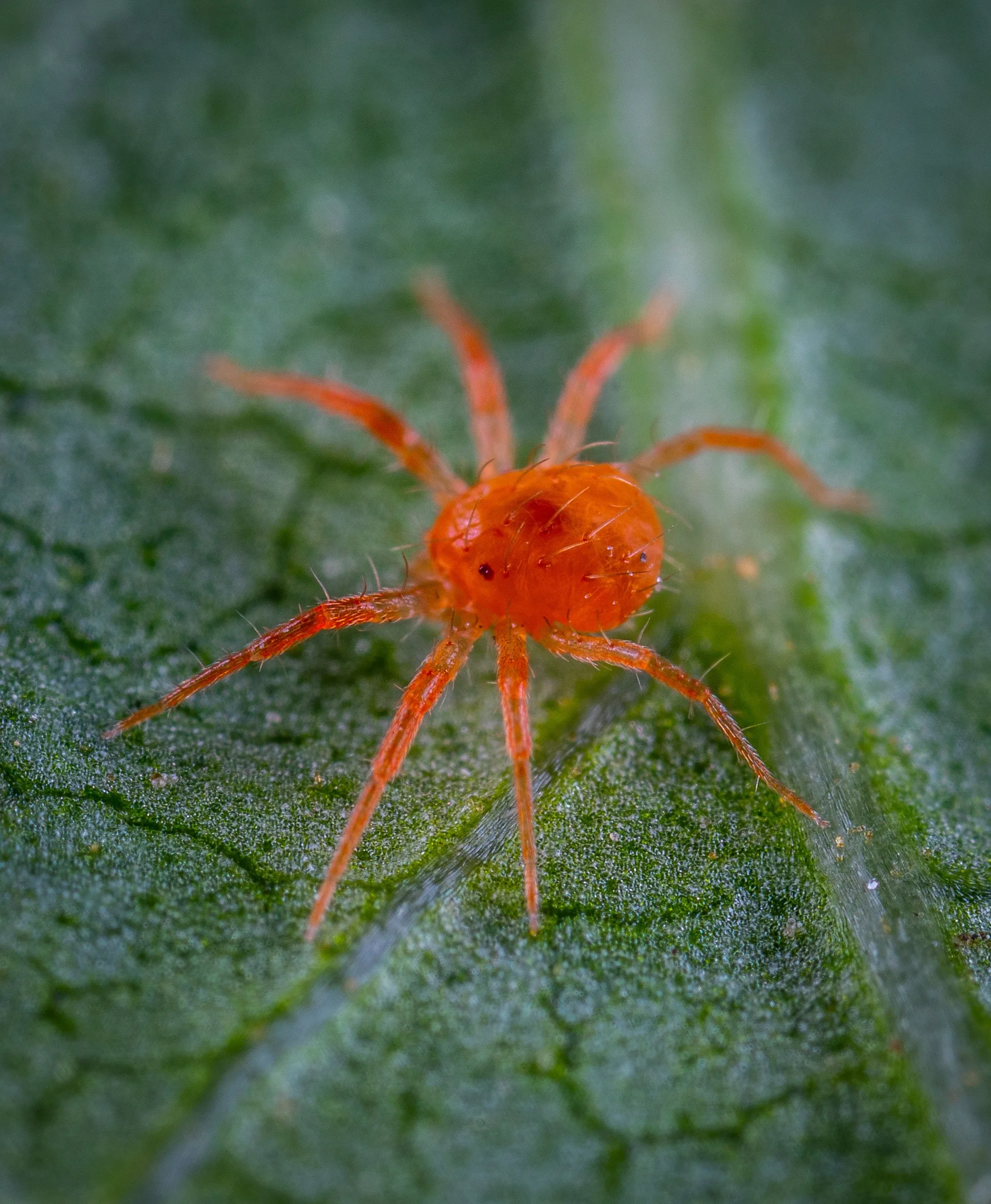
Spider mites are tiny arachnids, not insects, that are difficult to see with the naked eye until a population has grown large enough to produce visible fine webbing and noticeable leaf stippling. They thrive specifically in warm, dry indoor conditions, which is why infestations often become worse in winter when heating systems lower indoor humidity.
How to Actually Spot Spider Mites
- Stippled, dusty-looking leaves. Fine, pale yellow or white speckling across the leaf surface, caused by mites piercing plant cells to feed, is often the first visible sign, well before webbing appears.
- Fine webbing. Delicate, spider-web-like strands, especially where leaves meet stems or on the undersides of leaves, indicate a more established infestation rather than an early one.
- The paper test. Holding a plain white sheet of paper under a suspect leaf and gently tapping the leaf will dislodge mites, which appear as tiny moving specks on the paper — a reliable way to confirm their presence when they’re too small to see clearly on the leaf itself.
- Leaf undersides. Spider mites typically feed on the undersides of leaves, so checking there specifically, rather than just the visible top surface, catches an infestation earlier.
Why Spider Mites Thrive Indoors Specifically
Spider mites reproduce faster in warm, dry conditions, and the combination of indoor heating and generally lower humidity than outdoor environments makes many homes an ideal breeding ground, especially during winter months. Plants already stressed by low humidity or inconsistent watering also tend to be more vulnerable to a spider mite infestation taking hold and spreading quickly.
Treating a Spider Mite Infestation
- Isolate the affected plant. Spider mites can spread to nearby plants, so separating an infested plant reduces the risk of the problem spreading through a collection.
- Rinse the plant thoroughly. A strong, direct spray of water, particularly targeting the undersides of leaves, physically knocks mites off the plant and can meaningfully reduce a population on its own.
- Apply insecticidal soap or neem oil. Both are standard treatments recommended by extension programs for spider mites, applied directly to affected areas and repeated over one to two weeks, since a single application rarely addresses every life stage present.
- Increase humidity around the plant. Since spider mites prefer dry conditions, raising humidity through grouping plants, a pebble tray, or a humidifier makes the environment less favorable for them going forward.
Why Repeated Treatment Matters
A single treatment often kills active adult mites but not eggs, which can hatch and restart the population days later. Repeating treatment every five to seven days over a couple of weeks addresses newly hatched mites before they reach reproductive age themselves, which is why a one-time spray that seems to work initially can be followed by a resurgence if the treatment isn’t repeated on schedule.
FAQ
Are spider mites the same as regular garden spiders?
No — spider mites are a different, much smaller type of arachnid, more closely related to ticks than to spiders in the sense most people think of, and they’re plant pests rather than predators of other insects.
Can spider mites spread to humans or pets?
No — they feed exclusively on plant tissue and don’t bite humans or animals, making them purely a plant health concern rather than a household pest risk.
How quickly can a spider mite infestation get out of control?
Very quickly under favorable warm, dry conditions — their reproductive cycle is fast, which is part of why catching an infestation early, before visible webbing appears, makes treatment considerably easier.



