
The Short Answer
A white or grayish, powder-like coating on leaf surfaces is one of the more visually distinctive plant diseases, caused by fungal spores that thrive in humid conditions with poor air circulation. Unlike many houseplant problems, improving airflow around an affected plant is often as important as any direct treatment.
How to Identify Powdery Mildew
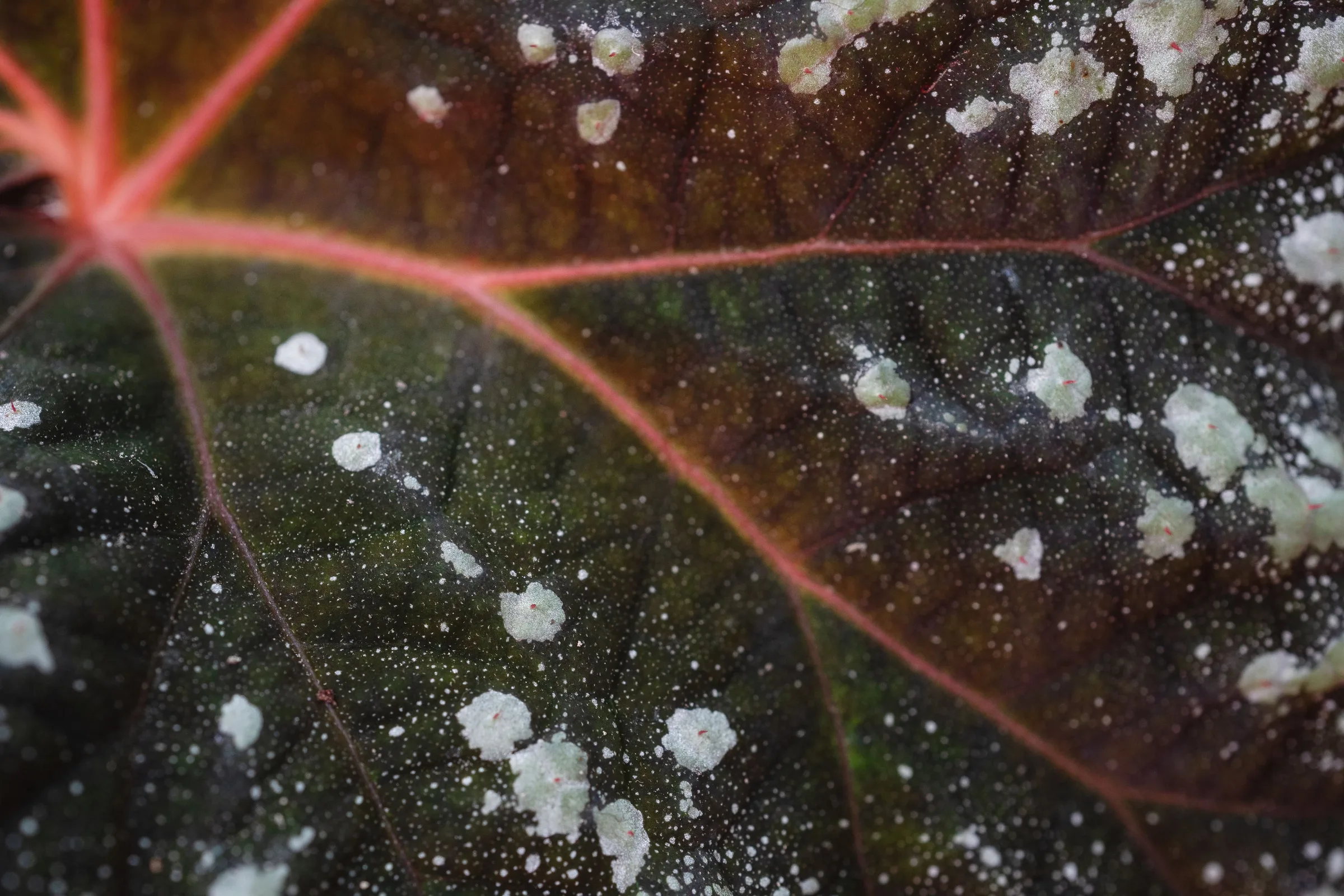
- A white or light gray, dusty or powdery coating, usually starting on the upper surface of leaves and sometimes spreading to stems.
- The coating can often be lightly wiped or rubbed off with a finger, distinguishing it from some other white or pale leaf discolorations that are more embedded in the leaf tissue itself.
- Affected leaves may eventually yellow, curl, or become distorted as the infection progresses and interferes with normal photosynthesis.
- Unlike pest infestations, no insects or moving specks are visible — the coating itself is the organism (fungal spores and mycelium), not an insect byproduct.
Why Powdery Mildew Thrives in Certain Conditions
Powdery mildew fungi generally favor moderate temperatures combined with high humidity and poor air circulation — conditions common in crowded plant groupings or rooms with little airflow. Unlike many other fungal diseases, powdery mildew doesn’t necessarily need standing water on the leaf surface to spread, which is part of why it can appear even on plants that aren’t being overwatered.
Treating an Active Infection
- Improve air circulation immediately. Increasing space between plants, opening a window periodically, or adding a small fan to keep air moving reduces the still, humid conditions the fungus favors.
- Remove severely affected leaves. Pruning away heavily coated leaves reduces the spore load on the plant and can slow the disease’s spread to healthy tissue.
- Apply a fungicide labeled for powdery mildew. Products containing potassium bicarbonate, neem oil, or sulfur are commonly used for houseplants, applied according to label instructions and generally repeated over a couple of weeks.
- Avoid overhead watering that wets the leaves. While standing water isn’t required for powdery mildew to spread, unnecessarily wetting foliage doesn’t help and can encourage other fungal issues alongside it.
Preventing Powdery Mildew From Returning
Spacing plants further apart, rather than crowding them tightly together, is one of the most effective long-term prevention steps, since good airflow between plants directly counters the still, humid microclimate the fungus needs to establish. Avoiding consistently high humidity around susceptible plants — without eliminating humidity entirely for plants that genuinely need it — and ensuring a room isn’t completely stagnant in terms of air movement both help reduce recurrence.
Which Houseplants Are More Susceptible
Powdery mildew affects a wide range of plants, but some common houseplants with fuzzy or textured leaves, along with plants kept in consistently crowded, poorly ventilated conditions, tend to show it more often than smooth-leaved plants kept with adequate spacing. Since the fungus is somewhat species-specific in many cases, a powdery mildew infection typically doesn’t jump between very different, unrelated plant types as readily as it spreads among closely related or similarly grouped plants.
FAQ
Is powdery mildew dangerous to humans or pets?
It’s not typically considered a direct health hazard to people or pets, though anyone with mold or fungal spore sensitivities may want to handle heavily affected plant material with some caution.
Can I use a homemade baking soda spray instead of a commercial fungicide?
Diluted baking soda solutions are a commonly discussed home remedy with some supporting evidence for mild cases, though a labeled commercial fungicide is generally more reliably effective for an established infection.
Will powdery mildew kill my plant if untreated?
A severe, prolonged infection can seriously weaken a plant by interfering with photosynthesis, but it’s rarely immediately fatal on its own — addressing airflow and applying treatment typically resolves it well before that point for most houseplants.



