
The Short Answer
Division and offset separation are propagation methods for plants that naturally grow in clumps or produce small “pup” plants at their base, rather than plants propagated through stem or leaf cuttings. Snake Plant, ZZ Plant, many ferns, and clumping succulents are common candidates for this approach.
Division vs. Offset Separation: What’s the Difference
Division involves splitting a single plant’s root mass into two or more sections, each with its own roots and growing points, essentially creating multiple independent plants from what was one. This works for plants that grow as a clump of multiple stems or rosettes sharing a connected root system, like many ferns and Snake Plants. Offset separation involves removing small “pup” plants that a parent plant naturally produces at its base, connected by a short runner or directly attached, rather than splitting a single connected root mass.
How to Divide a Clumping Plant
- Remove the plant from its pot and gently loosen the soil around the roots to see the natural separation points between individual stems or rosettes.
- Look for sections that already have their own roots attached, rather than trying to force a split through a single connected root mass without a natural division point.
- Use a clean, sharp knife to cut through connecting roots if a section doesn’t separate by gentle pulling alone.
- Pot each divided section into its own container with appropriate fresh soil, at a similar depth to how it was growing before.
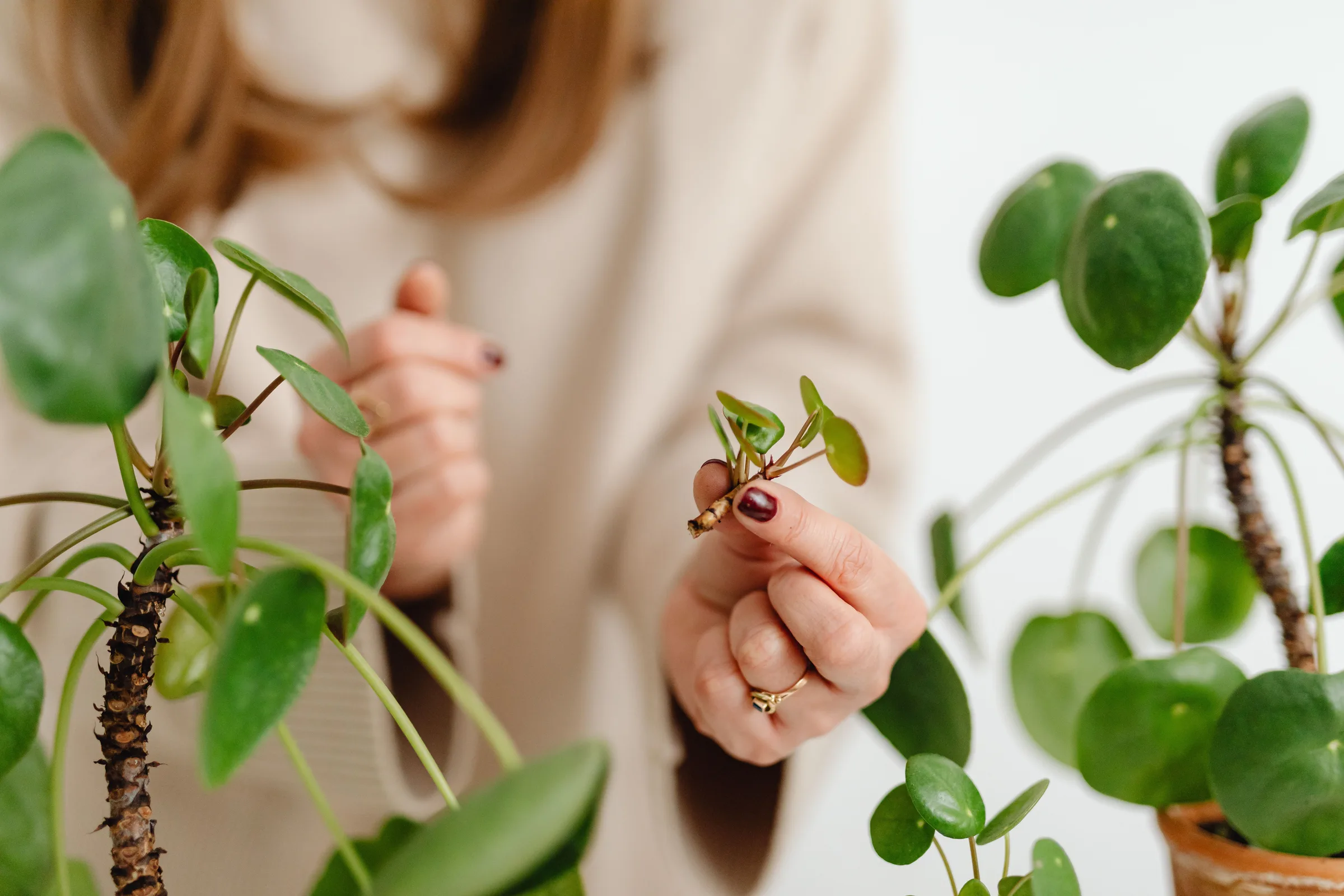
How to Separate an Offset (Pup)
Many succulents (like Haworthia and some Echeveria) and other plants produce small offsets around their base once mature. Once a pup has grown large enough to have its own small root system — often a noticeably separate rosette rather than just a tiny bump — it can usually be gently twisted or cut away from the parent plant’s base. Letting the cut on both the pup and the parent plant callus for a day or two before potting the pup separately, similar to leaf propagation, reduces the risk of rot at the fresh wound.
Signs a Plant Is Ready to Divide
- The plant has grown into a dense clump noticeably larger than when it was potted, with multiple distinct stems or rosettes visible.
- The pot is genuinely crowded, with growth slowing due to competition for space and resources among the clustered stems.
- Individual sections already show separate root development when the plant is removed from its pot, rather than being fused into a single indistinguishable mass.
- You want more plants from an already healthy specimen rather than needing to solve an outgrown-pot problem specifically — division can be done proactively, not just as a repotting necessity.
Aftercare for Divided Plants
A freshly divided section, having lost some of its root mass in the split, often benefits from slightly reduced light and a short recovery period with careful, not excessive, watering while new roots establish. Division is a more significant shock to a plant than propagating from a cutting, since an already-established root system is being physically separated, so some temporary wilting or stress in the days following is normal and usually resolves as the divided section settles into its own pot.
FAQ
Can any houseplant be divided, or only certain types?
Only plants that naturally grow as multiple connected stems, rosettes, or clumps are good division candidates — a single-stemmed plant like a Fiddle Leaf Fig has no natural division point and isn’t propagated this way.
Is division riskier than stem cutting propagation?
Generally yes, since it disturbs an already-established root system rather than starting fresh roots from a small cutting, but it also produces an already-established plant more quickly than growing a cutting from scratch.
How do I know if a pup is ready to be separated from its parent?
A pup with its own visible root system, rather than one that’s still just a small bump with no independent roots, is generally ready — separating one too early, before it has roots of its own, often fails.



