
The Short Answer
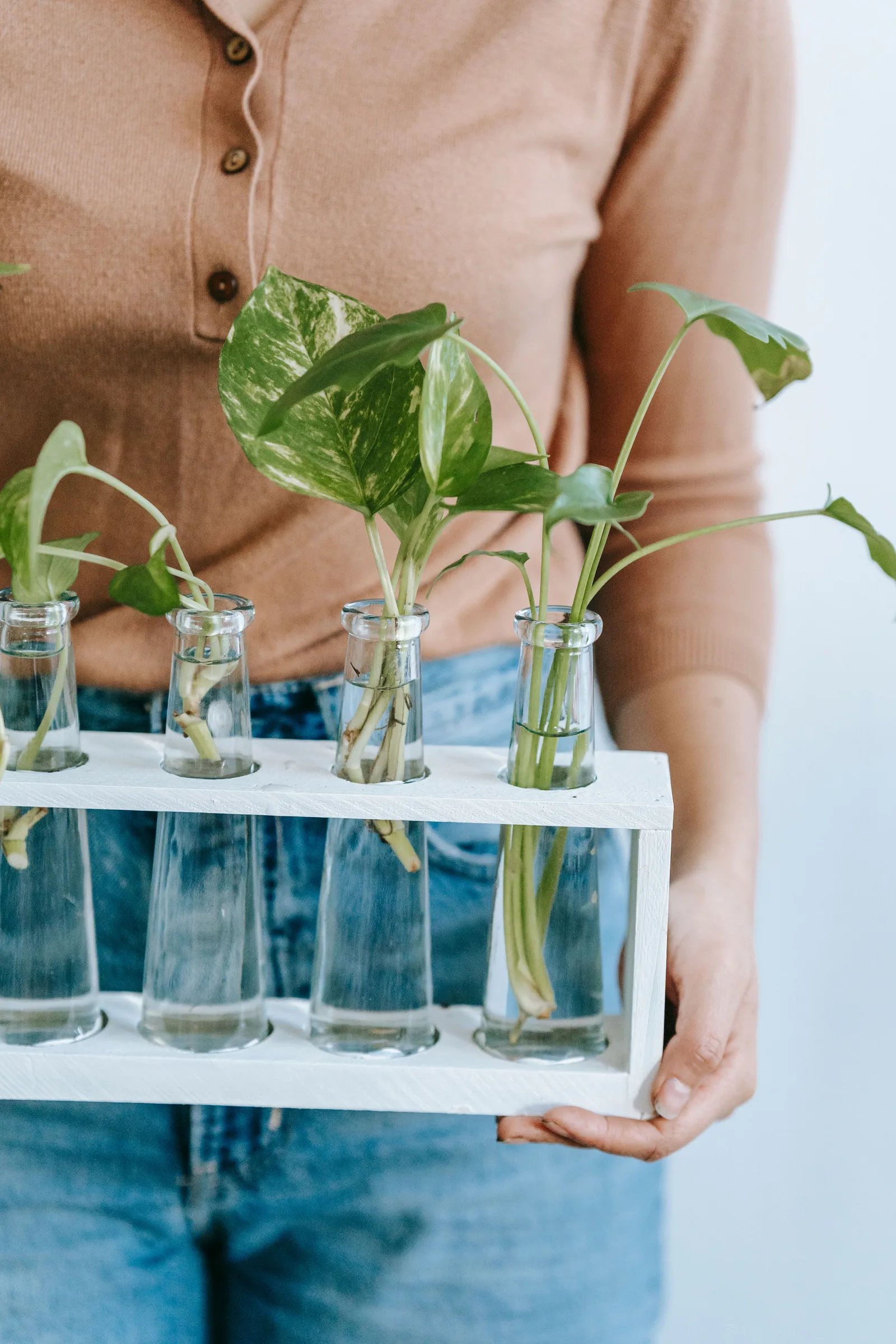
Water propagation works reliably for vining plants like Pothos and Monstera because a cutting with at least one node — the small bump on the stem where leaves and roots emerge — will grow new roots directly into water. The two details that most often go wrong are cutting without including a node, and leaving the cutting in unchanged water for too long.
Why the Node Matters More Than the Cut Itself
New roots emerge specifically from nodes, not from any random point along a stem. A cutting taken without at least one node included — for example, a leaf pulled off with just its own stalk and no stem section — has nothing to root from and won’t propagate successfully regardless of how it’s cared for afterward. When taking a cutting, include a section of stem with at least one node (and ideally a leaf attached) below the cut point.
Step-by-Step: Water Propagation
- Cut a healthy stem section just below a node, using clean, sharp scissors or pruning shears to avoid crushing the stem.
- Remove any leaves that would sit below the water line, since submerged leaves tend to rot and can foul the water.
- Place the cutting in a clear container with room-temperature water, positioning the node underwater but keeping remaining leaves above the surface.
- Set the container in bright, indirect light — not direct sun, which can overheat the water and stress the cutting.
- Change the water every five to seven days, or sooner if it looks cloudy, since stagnant water can encourage rot at the cut end.
When to Move a Cutting Into Soil
Roots an inch or two long are generally a good sign a cutting is ready for soil, though leaving it in water even longer isn’t harmful for most vining plants — some growers keep Pothos growing in water indefinitely rather than transitioning at all. If moving to soil, expect a short adjustment period where growth may pause briefly as the plant’s roots adapt to a different way of taking up water and nutrients than they experienced in water alone.
Common Reasons Water Propagation Fails
- No node included in the cutting. Without a node, there’s no tissue capable of producing new roots, regardless of water quality or light.
- Leaves submerged and rotting. Decaying leaf matter in the water can foster bacterial growth that damages the cutting’s cut end before roots have a chance to form.
- Water left unchanged for too long. Stagnant water with a buildup of decaying plant matter increases the risk of the cutting rotting rather than rooting.
- Cutting placed in direct sun. This can overheat the water rapidly, stressing or cooking the cutting rather than encouraging healthy root growth.
Which Plants Water-Propagate Well
Vining aroids — Pothos, Philodendron, and Monstera among them — are especially reliable for water propagation because their stems naturally produce aerial roots near their nodes even before cutting, giving water propagation a head start. Plants without a similar vining, node-based growth habit (many succulents, for example) generally propagate through different methods, like leaf or offset propagation, rather than stem cuttings in water.
FAQ
Can I use tap water for propagation, or does it need to be filtered?
Ordinary tap water works fine for most common propagation candidates like Pothos and Monstera; water-sensitive plants are a smaller concern here than in long-term potted care, since propagation is a relatively short window.
Why do my cuttings grow roots but then stall with no new leaf growth?
This is often related to insufficient light rather than a rooting problem — a cutting can successfully root in a dim spot but needs brighter indirect light to actually push new leaf growth afterward.
Is it better to propagate multiple cuttings in one container or separate ones?
Either works, though grouping several cuttings in one container makes for a fuller-looking plant once potted together, while separate containers make it easier to track each cutting’s individual progress.



