
The Short Answer
Many succulents can grow an entirely new plant from a single healthy leaf, but the process is slower and less forgiving than propagating a vining plant like Pothos in water. The leaf needs to callus over before touching soil, and too much or too little moisture during the process is the most common reason it fails.
Why Succulent Leaves Can Grow a Whole New Plant
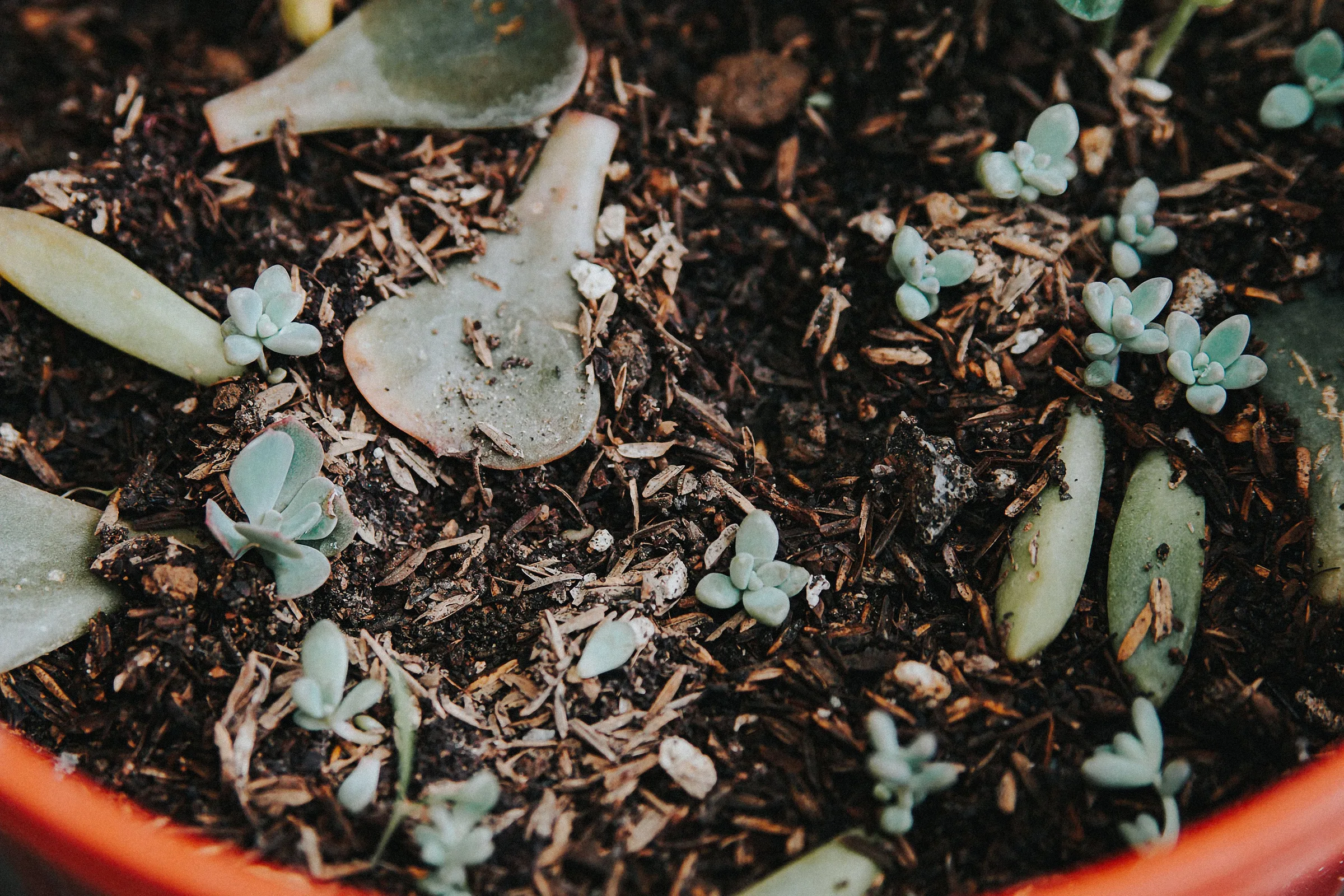
Unlike a vining plant, which roots from nodes along its stem, many succulents store enough energy and growth potential within an individual leaf to eventually produce both roots and a small new rosette at the leaf’s base. This is why succulent leaf propagation doesn’t require a stem cutting at all — a healthy, intact leaf removed cleanly from the main plant is often enough on its own.
Step-by-Step: Leaf Propagation
- Gently twist or wiggle a healthy leaf from the main stem, aiming for a clean removal that keeps the leaf’s base intact rather than tearing it partway.
- Let the leaf sit out, unplanted, in a dry spot out of direct sun for a few days to a week, until the cut end forms a dry, callused surface.
- Once callused, lay the leaf on top of well-draining succulent soil rather than burying it — the base should just touch the soil surface.
- Mist very lightly every few days, just enough to keep the soil from being completely dry, without soaking it.
- Wait for tiny roots and a small new rosette to appear at the leaf’s base, which can take several weeks to a couple of months depending on the species.
Why the Callus Step Matters
Placing a freshly cut or removed leaf directly into moist soil, without letting the cut end dry and callus first, significantly increases the risk of rot, since the open wound absorbs moisture readily before it has a protective barrier. This callusing step is the single biggest difference between succulent leaf propagation and water propagation of a vining plant, where an open cut submerged in water is exactly the intended process rather than something to avoid.
Common Reasons Leaf Propagation Fails
- Leaf torn rather than cleanly removed. A torn leaf that leaves part of its base still attached to the parent plant often can’t propagate successfully, since the growth point needed for a new rosette may be damaged or missing.
- Skipping the callus period. Placing an uncallused leaf on or in moist soil right away is one of the most common causes of rot before any roots have a chance to form.
- Overwatering during propagation. Since the leaf isn’t yet supported by roots, excess moisture around it encourages rot rather than helping growth.
- Using a leaf that wasn’t healthy to begin with. A leaf that was already damaged, wrinkled, or diseased before removal rarely has enough stored energy left to produce a new plant.
Not Every Succulent Propagates the Same Way
Leaf propagation works well for many Echeveria, Sedum, and Graptopetalum varieties, but not universally across all succulents. Some species propagate more reliably from stem cuttings or offsets (small “pup” plants that naturally form at the base of the parent) rather than individual leaves. Checking whether a specific succulent is a known good candidate for leaf propagation before trying it saves the disappointment of a leaf that simply wasn’t going to work regardless of technique.
FAQ
How long does succulent leaf propagation typically take?
Several weeks to a couple of months is typical before a visible new rosette forms, and the original leaf often shrivels and can be gently removed once the new plant is established enough to survive on its own roots.
Can I speed up the process with rooting hormone?
Rooting hormone can help with some stem cuttings, but for leaf propagation specifically, the callusing step and moisture balance tend to matter more than any added hormone product.
What if the leaf shrivels before any roots appear?
Some shriveling as the leaf uses its stored energy is normal, but a leaf that shrivels completely and turns mushy or black rather than staying firm has usually failed and can be discarded.



