
The Short Answer
Aphids are small, soft-bodied insects that typically cluster on new growth — tender stems, unopened buds, the undersides of young leaves — where plant tissue is softest and easiest for them to feed on. They reproduce quickly, but they’re also one of the more straightforward common pests to treat effectively if caught before the population grows large.
How to Identify Aphids
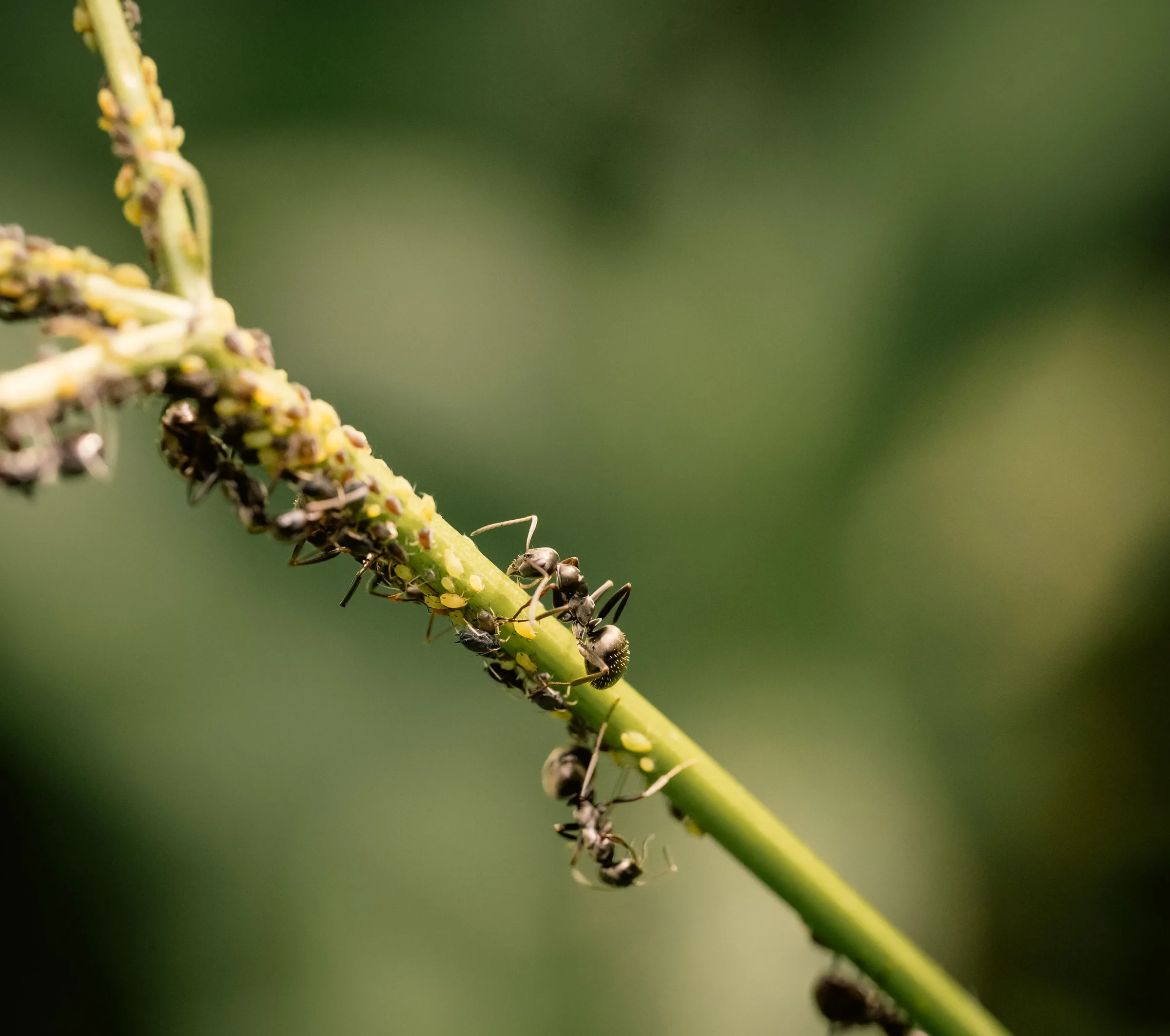
- Small, pear-shaped insects clustered together, commonly green but also found in shades of black, brown, or pink depending on the species.
- Concentrated on new growth. Aphids favor tender young stems, unopened flower buds, and new leaves over tougher, more mature plant tissue.
- Curled or distorted new leaves. Heavy aphid feeding on developing leaves can cause them to unfurl curled, puckered, or otherwise distorted.
- Sticky honeydew and sooty mold. Like other sap-feeding insects, aphids excrete honeydew, which can attract sooty mold or simply leave nearby surfaces feeling tacky.
Why Aphid Populations Grow So Quickly
Many aphid species can reproduce without mating under favorable conditions, and females can give birth to live young rather than laying eggs that need time to hatch, allowing populations to expand rapidly once established on a plant. This is part of why a small, easily missed initial cluster can become a much more visible problem within a couple of weeks if left unaddressed.
Treating an Aphid Infestation
- A strong spray of water. For a light to moderate infestation, simply spraying affected areas with a firm stream of water can physically dislodge and remove a significant portion of the aphid population.
- Insecticidal soap or neem oil. Standard, extension-recommended treatments for aphids, applied thoroughly to affected areas including the undersides of leaves where aphids often cluster.
- Manual removal for small infestations. Wiping off a small, localized aphid cluster by hand or with a damp cloth is a quick, chemical-free option when the infestation is caught very early.
- Repeat as needed. Given how quickly aphids reproduce, checking back and repeating treatment within a week helps catch any population that wasn’t fully eliminated the first time.
Why Aphids Are Considered Relatively Easy to Manage
Unlike scale or mealybugs, aphids don’t have a hard protective shell or thick waxy coating, which makes them more directly vulnerable to contact treatments like water sprays, insecticidal soap, and neem oil without needing the same repeated, staged approach those more protected pests require. This is a meaningful practical difference when deciding how aggressively to treat an infestation and how quickly to expect results.
Ants and Aphids: A Related Pattern Worth Knowing
Ants are sometimes drawn to the honeydew aphids produce and, in some cases, actively protect aphid colonies from natural predators in exchange for that food source. Seeing ants regularly traveling along a plant’s stems can be a secondary clue pointing toward an aphid problem worth investigating directly, even before the aphids themselves are spotted.
FAQ
Can aphids spread to other plants nearby?
Yes — aphids can walk between touching plants, and winged forms can develop under certain conditions and fly to new host plants, so isolating a heavily infested plant during treatment is a reasonable precaution.
Are all aphids the same color?
No — while green is the most commonly recognized color, aphids also appear in black, brown, gray, and pink depending on species, so color alone shouldn’t rule out an aphid identification.
Is it normal to see a few aphids even on a well-cared-for plant?
Occasional aphids can show up on almost any plant, especially one near an open window or that spent time outdoors. A small number caught early and treated promptly is a much easier situation than an established, spreading colony.



