
The Short Answer
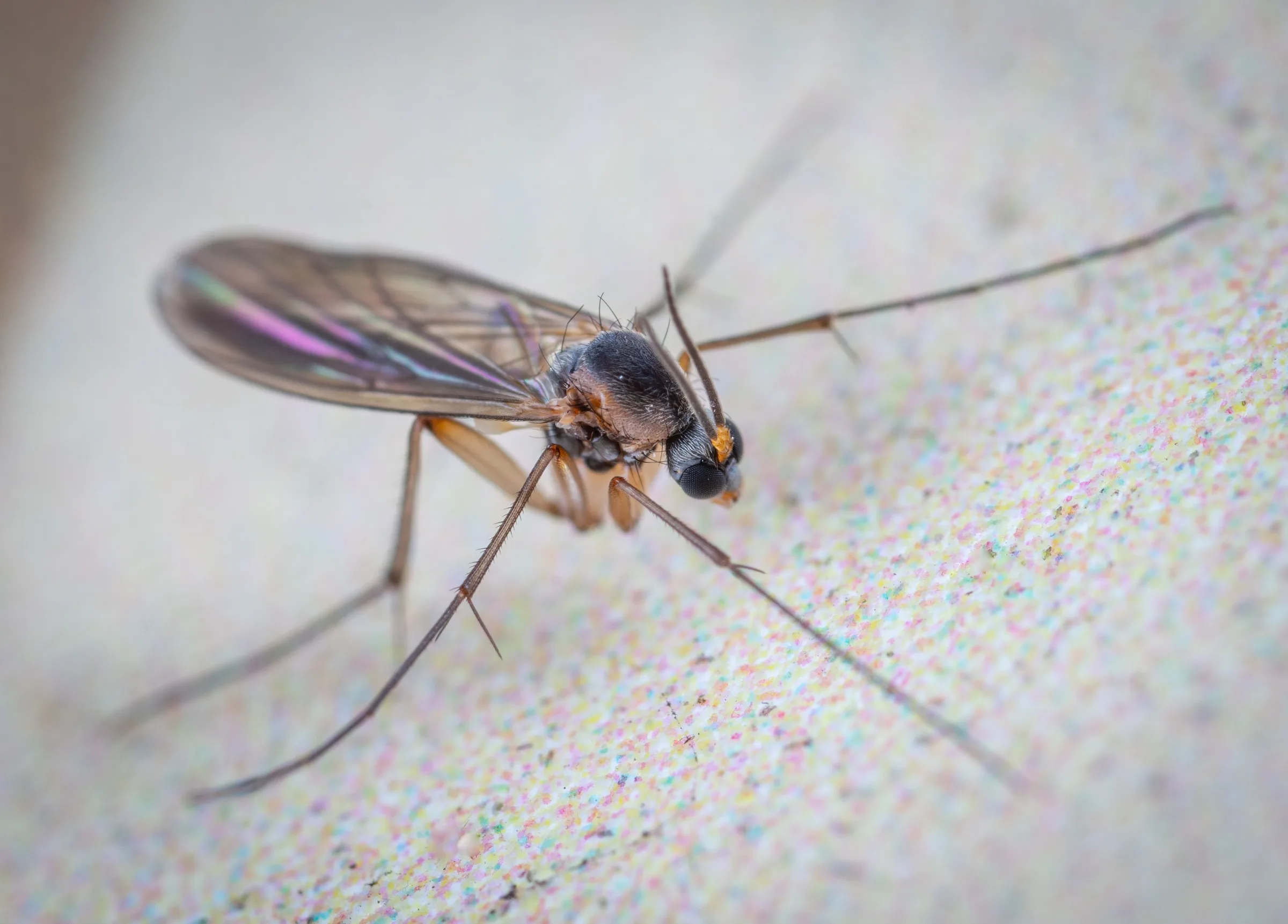
Fungus gnats are small, dark flies that breed in consistently moist potting soil, not on the plant itself, which is why they’re mostly a soil-moisture problem rather than a true pest infestation on healthy plants. Letting the top of the soil dry out between waterings addresses the root cause for most cases, since gnat larvae can’t survive in dry conditions.
Why Fungus Gnats Show Up in the First Place
Adult fungus gnats lay eggs in moist organic matter, and potting soil that stays consistently damp — especially soil with a high proportion of peat or compost — creates an ideal breeding environment for their larvae. The adults themselves are mostly a nuisance, hovering around the soil surface and occasionally flying up when disturbed, but the underlying moisture problem is worth addressing since it can also contribute to root rot in the plant itself.
The Core Fix: Let the Soil Dry Out
Allowing the top inch or two of soil to dry out fully between waterings breaks the breeding cycle, since fungus gnat larvae need consistently moist conditions to survive. This is usually enough on its own to significantly reduce a gnat population over a couple of weeks, since new eggs can’t successfully hatch and develop in drier soil even as existing adults continue flying around briefly.
Faster Fixes If You Want to Speed Things Up
- Yellow sticky traps. Placed near the soil surface, these catch adult gnats and also give a rough sense of how large the population is and whether it’s shrinking over time.
- A layer of sand or diatomaceous earth on the soil surface. This creates an inhospitable, dry barrier that makes it harder for adults to lay eggs successfully at the soil surface.
- Hydrogen peroxide soil drench. A diluted hydrogen peroxide solution (typically a weak dilution with water) poured into the soil can kill larvae on contact without harming most established houseplants, though it should be tested on a small area first for sensitive species.
- Bacillus thuringiensis israelensis (Bti) products. Sold as “mosquito bits” or similar products for garden ponds, Bti specifically targets fly larvae including fungus gnats and is considered safe for most houseplants when used as directed.
Preventing Fungus Gnats From Returning
Since fungus gnats are fundamentally a moisture problem, the most durable prevention is simply adjusting watering habits going forward rather than repeating a one-time treatment on an otherwise unchanged watering routine. Checking soil moisture directly before watering, rather than watering on a fixed schedule, naturally reduces the consistently damp conditions gnats need to establish in the first place.
When Fungus Gnats Are Actually a Bigger Problem
In most cases, adult fungus gnats themselves don’t damage a healthy houseplant directly — the annoyance is mostly to the people living with the plant, not the plant’s health. However, a very large larval population can occasionally feed on fine root hairs, particularly in seedlings or young plants with less established root systems, which is worth watching for if a heavily infested plant also starts showing unexplained stunted growth.
FAQ
Are fungus gnats harmful to humans or pets?
No — they’re purely a nuisance pest for people and don’t bite or transmit disease, and they pose no direct risk to pets either.
Can new potting soil bring fungus gnats into my home?
Yes, this is a common source — bagged potting soil can sometimes already contain eggs or larvae, so a plant that develops gnats shortly after being repotted with new soil is a common, unsurprising pattern.
How long does it take to fully get rid of an infestation?
With consistent soil-drying between waterings, most infestations noticeably improve within two to three weeks as the breeding cycle breaks down, though a fully entrenched population in multiple pots can take longer.



